
Finding My Balance
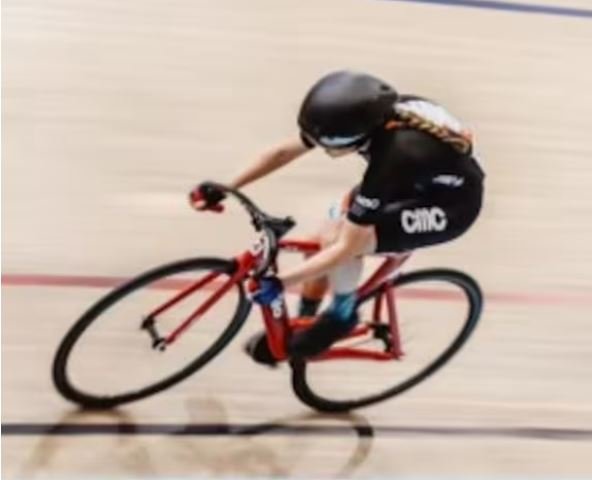
“I had my future planned out by the time that I was 13”. A statement many athletes like myself could declare from a young age, growing up in sports where we are wired to dream big, and trained to achieve. And I was on track to follow those dreams, until I wasn't.
I had been cycling since year nine. 5am alarms every single morning. 14 hour training weeks. It's a high-intensity sport if you want to perform at a high level. I was working towards something big. In the back of my mind, I knew making it to the Junior Track Worlds Championships would make all the struggle worth it. By March 2024, I was ranked first in Auckland for my age group. It was at this moment that Junior Worlds changed from a dream to a goal.
I was always out with my friends on weekends and I loved school too like many people my age.
Then picture this: you’re at the National Track Championships, your most important event of the year. You’re in the last lap of your race, only metres from the finish line, when the two girls in front of you clip wheels. Suddenly your bike is crashing at full speed into theirs, propelling you into the air like superman. Looking around you at the mass of bikes and bodies, you try to grapple with the severity of the accident.
Still in shock and unaware of the injuries I had sustained, I hobbled over to the med tent alongside half of my race companions. Of course my first course of action was to update my private story. But soon after, I watched a girl get carried away in a stretcher and felt grateful that I was better off.
Later that night I found myself lying in a hospital bed being treated for all kinds of different injuries. But in the following weeks, it wasn’t just the physical pain that was hard. After the accident I was in shock and didn’t immediately realise something else was also going on. I had gone into an unshakable state of fatigue essentially overnight, and it just kept getting worse.
I still vividly remember my first day back at school post-crash because it was that day that it became increasingly clear that something was very wrong. I was sitting in Economics class, staring at the graphs on the board and being completely unable to make any sense of them. I couldn’t concentrate on the tasks I was being given nor could I retain much information. By lunchtime I had to text my mum to pick me up from school, not only because of my brain fog and how exhausted I was, but I had also started to experience other horrible symptoms like headaches and sensitivity to light.
At first, I let myself believe that I'd be back in a few short weeks. “Just take it one day at a time” I would tell myself. But those days turned into months. And if you were wondering, the comeback I imagined never happened. Early morning alarms I traded for being unable to get out of bed anymore.
I had countless medical tests to attempt to get to the bottom of this mysterious illness I was living with, and eventually, I was diagnosed with coeliac disease. Most fifteen year olds would be upset when they are told they can’t consume gluten anymore, but I was just excited to get my life back. We thought that this was the answer, finally, but my symptoms persisted and got worse on the gluten free diet. My body wasn’t bouncing back like usual, and in June, I was forced to pull out of a race due to immense chest pain. That was the last time I was on my bike.
At first, people always asked me when I would be back. I never had an answer for them. I felt lost beyond comparison. I watched as all the work I had put into cycling for years slowly went to waste. My teammates kept competing, my classmates kept going to school, my friends kept hanging out, and in the words of Phoebe Bridgers, “I watched the world from the sidelines”.
No medical professionals had any answers for us. My parents thought that I must have chronic fatigue syndrome/ME as there were no other logical causes behind my symptoms. But I knew that there was more to it than that. I remember telling multiple GP’s about the heart pain I had suffered on my final race day, as well as the fact that my heart rate had been much higher than normal for a long time now (since I had had covid in August 2023). They all just brushed it off as nothing. One doctor even told me that the only possible cause for a higher heart rate was that I must be unfit, a funny thing to be told as someone that exercised everyday. Eventually, I was referred to see a cardiologist.
While we were waiting for the appointment with the cardiologist, we went on a family holiday to try and cheer me up, and it did. But, when I returned home, I was bed bound for two weeks. I didn’t even have the energy to walk to the kitchen for meals, let alone to see any of my friends or go to school. This was the worst my condition ever got.
In August, I completed an ECG and a standing test with a cardiologist. The standing test was conducted to measure my heart rate and blood pressure on standing. The results showed that my heart rate was elevated, and, most critically, that my blood pressure plummeted when I stood up. I was diagnosed with dysautonomia, a chronic and complex disorder of the autonomic nervous system (ANS). The ANS regulates many of our important involuntary bodily functions, so when it’s not working properly it gives rise to the symptoms I was experiencing such as low blood pressure, elevated heart rate, severe brain fog and difficulty concentrating, headaches, inability to filter light, nausea, dizziness on standing, blotchy skin, low immunity and chronic fatigue syndrome/ME. There are fifteen types of dysautonomia and mine is late-onset orthostatic hypotension.
Dysautonomia is highly correlated with autoimmune conditions like coeliac disease. Viruses, like Covid (which I had), and other stressors are also thought to make you more susceptible to developing dysautonomia. For me, the cycling accident triggered it, most likely due to the stress it caused on my body, essentially thrusting me into a constant state of fight or flight. Sadly, some people don’t recover and have to manage their symptoms for life, but teenagers have a strong chance of recovery, even if it takes years. I am now 17 years old and in Year 13 and will be coming up on 2 years of living with dysautonomia in March this year. In that time, I've barely been to school, I haven’t been able to socialise or see my friends much, and have had to give up returning to competitive cycling.
I fully focused on getting better and doing everything my doctors and medical team told me to. At the start it was very hard, and there were no measurable results of my effort. What helped me the most was ensuring I had a good routine going. Setting my alarm for the same time every morning, getting straight out of bed and making it, going for a 10 minute walk morning and afternoon etc. I also loved rewarding myself with little treats throughout the week. My treatment included a lot of resting and pacing. I also had an incredible exercise rehabilitation programme with a team of clinical exercise physiologists. I took medication (midodrine) to raise my blood pressure for over a year and ingested lots of salt and water. These are all standard treatments for dysautonomia. I also did breathing exercises with a physiotherapist and have found vagus nerve physiotherapy and stimulation are really good. Nutrition is important, too, and I try to eat a balanced diet. I have so much support from family, friends, my school and my team, which has made my journey to recovery possible.
For me, believing I would get better was immensely important. It was difficult to have an optimistic mindset at the start when I was so unwell, especially since you generally get worse before you get better. Research actually backs up that a positive attitude can help you get well.
Towards the end of last year, my health started to look up. Upon returning to school this year, I have remarkably been able to attend full days of school, and complete my assignments at a high level as I used to. On top of this I have also been out most weekends with my friends. I have picked up golf and Pilates, and I’ve loved being able to exercise freely again. I have also been running consistently and will be competing in a 8.4km run to raise money for dysautonomia next month. I have come off my blood pressure medication, and my blood pressure and heart rate have returned to normal. I will soon be discharged from my cardiologist. I am finally able to live a normal life again which I could not be happier about, and while I am still not 100% back to normal, I am 100% going in the right direction.
I’ll never forget the day of my accident or the day I finally accepted that my body could no longer cope with my sport that I loved so much. I’ll never forget the countless hospital visits, blood tests and doctors appointments or the day I learnt my condition had no definite cure. I still miss the rush of raceday. But I know there’s more to me than how fast I can ride a bike. I’ve learned that it’s okay for my ambitions to change. Now, I am completely focused on going to the University of Sydney to study a Bachelor of Commerce in Accounting and Finance. My grandma always says “life has a funny way of working itself out”, which I think is so true. So, if life throws you a curveball, and changes your plan or your dream, just know, you are going to be okay, and it will all work out in the end.
We are often taught to tie our worth to results. But you are not your race times. You are not your ranking. You are not your academic achievements, or the number of parties you go to. Dysautonomia has taught me that you are not what you do, you are who you are when everything falls apart, and you choose to stand back up anyway and keep going.
If the symptoms of Dysautonomia sound all too familiar, my advice is just that – keep going! Put in the work, however hard it may feel. And do believe you will get better. You will.
By Immie Lamont
